


Explore how IT security technologies can create hidden risks when layered without a plan.

October 23, 2026
A business can experience slow growth for months or years before any obvious IT failure appears. The real cause may be a support model that quietly holds back productivity, not a sales or marketing issue.
Most business owners picture IT support as a backup plan, something to call on when a system crashes. In practice, the setup you choose shapes your company long before any visible problem shows up.
A support arrangement can look perfectly fine on the surface while quietly slowing your team's daily work underneath it. No outage has to occur, and no obvious technical failure has to appear, for that drag to be real.
That's because IT support was never just about fixing broken computers. It's about keeping systems reliable, helping a team work efficiently, and backing the business goals a company is actually trying to reach.
So when the support model doesn't fit, growth can slow down without anyone tracing the cause back to IT. The real cost of that mismatch tends to surface in small, everyday friction rather than in dramatic emergencies.

Picking an IT support model isn't really a question of who gets called when something breaks. It's a question of how the business runs every single day, since the right setup keeps a team moving while the wrong one builds in slowdowns nobody notices at first.
Consider a help desk that only responds once an issue is already reported: a team in that setup spends real time simply waiting for a fix, and those small delays accumulate into lost hours over weeks and months.
A proactive support provider takes the opposite approach, working to catch problems before they start. The payoff is fewer interruptions and steadier productivity across the staff.
When IT support lines up closely with business needs, a team can stay focused on what actually matters: serving customers and hitting business goals. When it doesn't, projects stretch longer, communication bogs down, and opportunities slip by — all without a single major outage ever occurring.
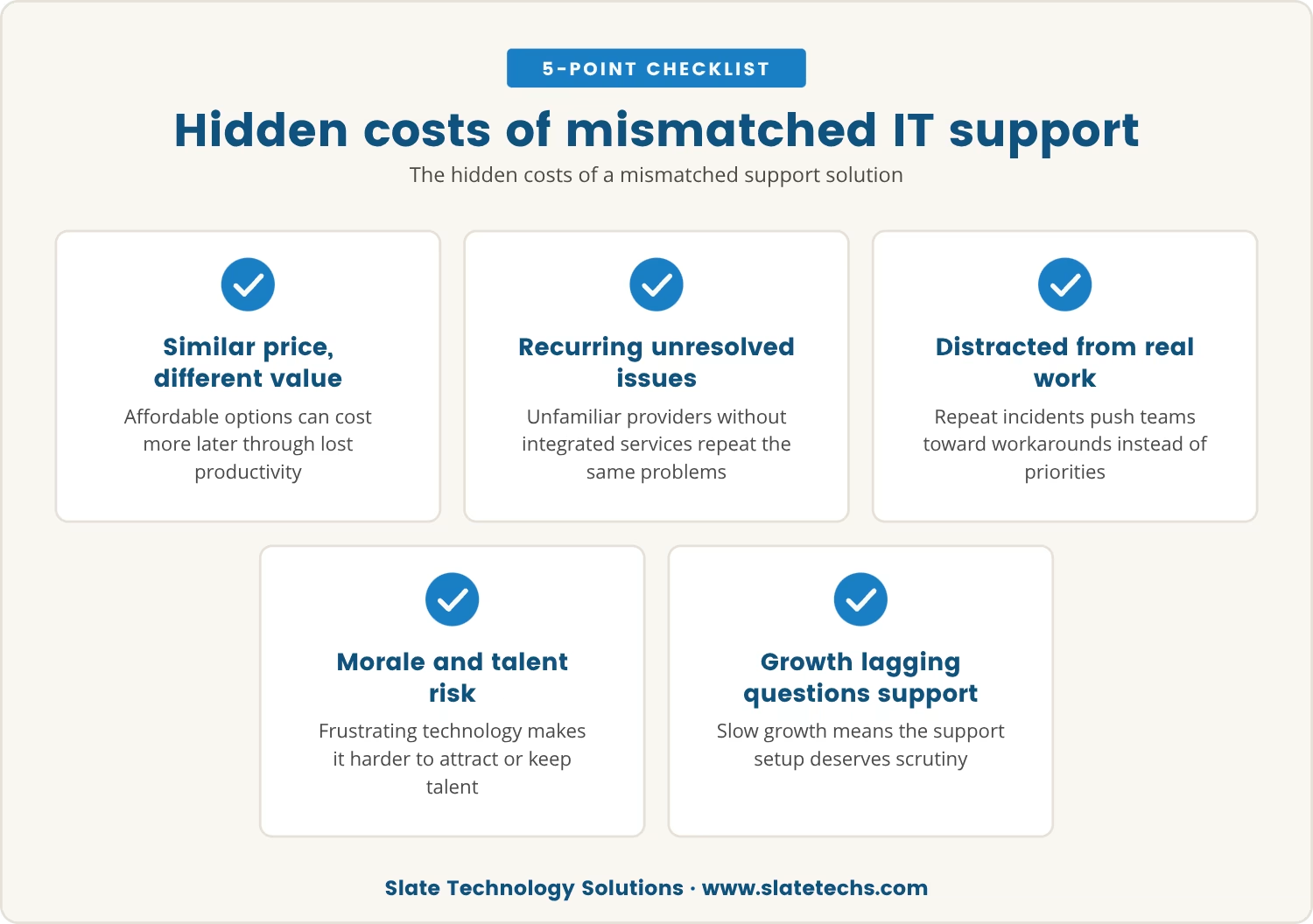
Not every IT support model delivers the same value, even when the price tag looks similar. Some options seem affordable at first glance but end up costing more over time through lost productivity and growth that never quite materializes.
A provider unfamiliar with the business, or one that doesn't offer integrated computer services, tends to produce the same problems again and again. Each repeat incident pulls the team's attention away and pushes them toward workarounds instead of the work that actually matters.
Left unaddressed, those small disruptions wear down morale, and a workplace where technology gets in the way rather than helping becomes a harder place to attract or keep strong talent.
If growth is lagging behind expectations, the IT support setup is one of the first places worth questioning.
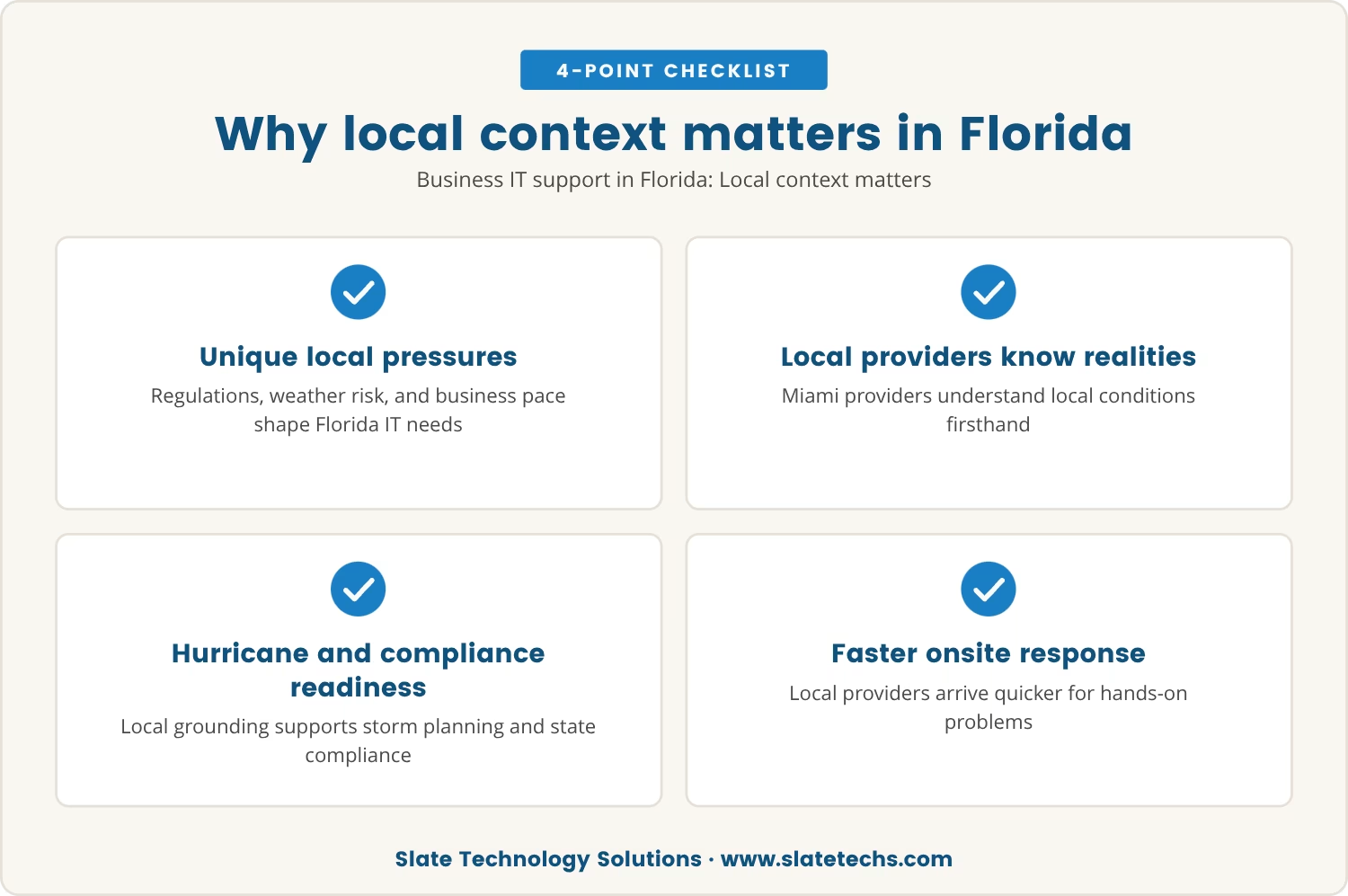
Florida's technology landscape, particularly in cities like Miami, comes with pressures that don't show up everywhere. Regulations, weather risk, and the sheer pace of local business all factor into what kind of support actually makes sense.
Working with IT companies in Miami, or an IT company Miami businesses already trust, means partnering with a provider who understands those local realities firsthand. That local grounding translates into hurricane planning, help staying compliant with state rules, and systems that keep running even as conditions shift.
A local provider also gets onsite faster when physical, hands-on help is what a problem actually requires, which keeps the business on track instead of waiting on a distant fix.
Most business leaders expect trouble to announce itself as a crash or an outage. The real warning signs are usually quieter than that, and each one below carries its own kind of cost.
Small problems that take too long to resolve leave a team waiting instead of working. That delay drags down productivity quietly, without ever looking like an emergency.
Employees who routinely invent their own fixes are revealing a support model that isn't addressing root causes. Left alone, those shortcuts tend to compound into bigger problems later.
Maintenance and updates are supposed to be scheduled around the workday, not through it. A team caught off guard by downtime is a sign the support model isn't proactive enough.
A provider that only reacts to problems rarely has the bandwidth to spot where automation could help. The result is staff doing manual work that better tooling could have eliminated.
IT support is supposed to scale alongside the business it serves. When adding new users or tools turns slow or complicated, the support setup itself has become the bottleneck.
Managed IT services go beyond technical support to function as a partnership, one built to help a business grow by keeping technology aligned with its goals.
A managed service provider (MSP) takes on responsibility for keeping systems current, secure, and ready for whatever change comes next. That proactive stance cuts down on surprises and frees up the team's time for actual business activities.
With that kind of support in place, a company can plan ahead knowing its technology will keep pace, which makes it far easier to launch new projects, open new locations, or add new services without hitting unexpected roadblocks.
Picking the right support model is about more than comparing price tags. A few factors matter more than cost alone:
The signs that an IT support model isn't working are often easy to miss precisely because they're quiet. Slowing growth or a team visibly frustrated with its own technology are both worth a closer look.
Consider whether more time is spent troubleshooting than moving forward. If that sounds familiar, the support setup is probably due for a change.
Switching to a model that actually fits the business can unlock opportunities, lift morale, and move goals closer within reach. The right support does more than keep systems running — it helps the business grow.

Many businesses with 45 to 100 users find themselves stuck, not because of a visible IT failure, but because their support model quietly limits progress. At Slate Technology Solutions, we understand how frustrating it is when growth stalls for reasons that aren't obvious.
If you're ready to see how a different approach to IT support could help your business move forward, let's talk about what your current setup is really doing for you.
Sign a 3-year contract with Slate Technology Solutions and get 3 months of service free—an easy way to experience the benefits of the right IT support setup.
Teams that routinely wait on IT issues to get resolved, or projects that consistently run longer than expected, point to a provider not meeting the business's needs. Repeated problems, slow response times, and a lack of proactive advice are all signs the support model is limiting business activities.
A traditional help desk responds to problems only after they occur, while managed IT services take a proactive approach, monitoring systems, preventing issues, and supporting long-term planning. An MSP's involvement means fewer disruptions and stronger alignment with long-term business goals.
Outsourcing IT support opens access to a wider range of expertise and resources than most in-house setups can match on their own. That access frees the internal team to focus on core tasks, reduces downtime, and supports growth plans, with the right partner tailoring services to fit the business's specific needs.
Reliable IT support means less time spent wrestling with technical issues and more time spent on productive work. When problems get resolved quickly and systems run smoothly, employees can stay focused on their main responsibilities without constant interruption.
Clear communication, proactive monitoring, and the ability to scale alongside the business are the essentials to look for. A provider with local knowledge and a track record supporting small businesses helps sidestep common pitfalls and keeps operations running efficiently.